





OpenClaw x ARTiGO A5000: Your First Step into Agentic AI with a Trusted Hardware Platform
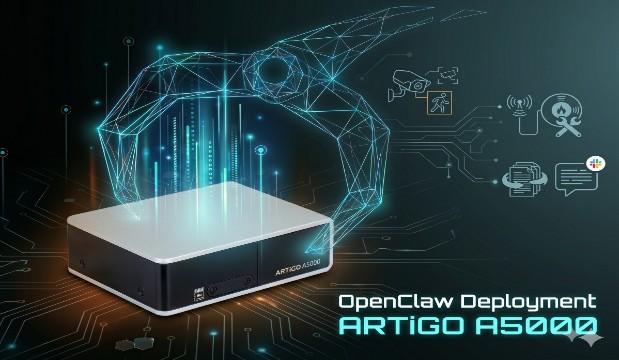
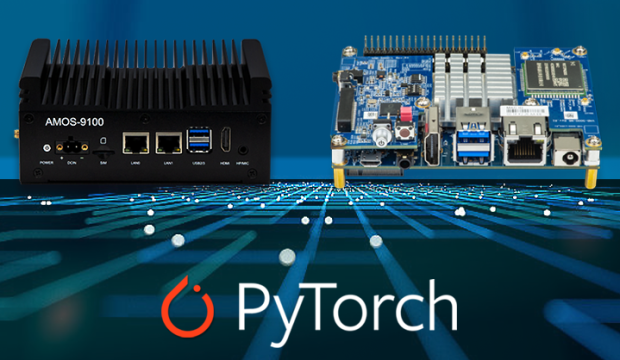
As Agentic AI technology evolves rapidly, more enterprises are exploring its potential in edge computing scenarios. OpenClaw stands out as a leading open-source AI automation framework. VIA has successfully deployed OpenClaw on the ARTiGO A5000 and verified its basic operations. This article outlines the background and feasible verification scenarios of this integration, serving as a reference for teams interested in exploring these technologies. Once your company completes the necessary security, system, and reliability validations, the ARTiGO A5000 can transition directly into mass production as your hardware platform, significantly reducing the cost and time of moving from evaluation to deployment.
Why Choose ARTiGO A5000 as Your Verification Platform?
The A5000 is ideal for evaluating and piloting OpenClaw due to:
- Edge Computing Performance: Supports multi-task workflow testing (e.g., summarization, vision model inference, and event triggering).
- Rich I/O Expansion: Interfaces like GPIO and USB facilitate connections to industrial sensors and cameras for rapid integration testing.
- Stable Long-term Operation:Industrial-grade design ensures durability during long-term stress and endurance testing.
- Local Data Processing: Processing data at the edge reduces the risks and limitations associated with frequent cloud uploads.
For OpenClaw installation steps, please refer to the technical documentation: How to run OpenClaw in ARTiGO A5000
Three Pilot Scenarios for Verification
-
Smart Surveillance Functional Verification
Leverage the A5000’s edge inference capabilities to test person detection, anomaly identification, and virtual fencing. Observe the feasibility of automated triggers before a full-scale rollout, which would require deeper evaluation of event definitions and alarm system integration.
-
Environmental Sensing Automation Testing
Connect CO or smoke sensors via GPIO to test automated response workflows (e.g., alarms or equipment activation). Future deployment as safety-related equipment would require further safety certifications and Failure Mode and Effects Analysis (FMEA).
-
Automated Research Information Summarization
Schedule the automatic retrieval of technical documents or papers, using LLM interfaces to generate summaries and push them to collaboration tools like Slack. This validates the feasibility of automated information processing while remaining subject to corporate data access and security policies.
From Evaluation to Production-Ready Deployment
The ARTiGO A5000 provides a stable, controlled edge environment that allows teams to complete preliminary verification without disrupting existing systems. Once validation and compliance requirements are met, the A5000 serves as a production-ready hardware platform to accelerate your official launch.
The VIA Technical Team can assist you in setting up the initial OpenClaw environment on the A5000 and provide hardware/interface consultations. We recommend that your R&D or security teams lead the functional trade-offs, security audits, and system integration. To learn more, please contact our sales or technical teams.
Please Note: OpenClaw is an emerging technology; its security standards, system compatibility, and long-term maintenance in B2B environments are still evolving. The integration described here is intended for “Technical Evaluation and Pilot Verification” to help teams clarify feasibility and risk boundaries. It is not a finalized product solution or a comprehensive endorsement of OpenClaw.